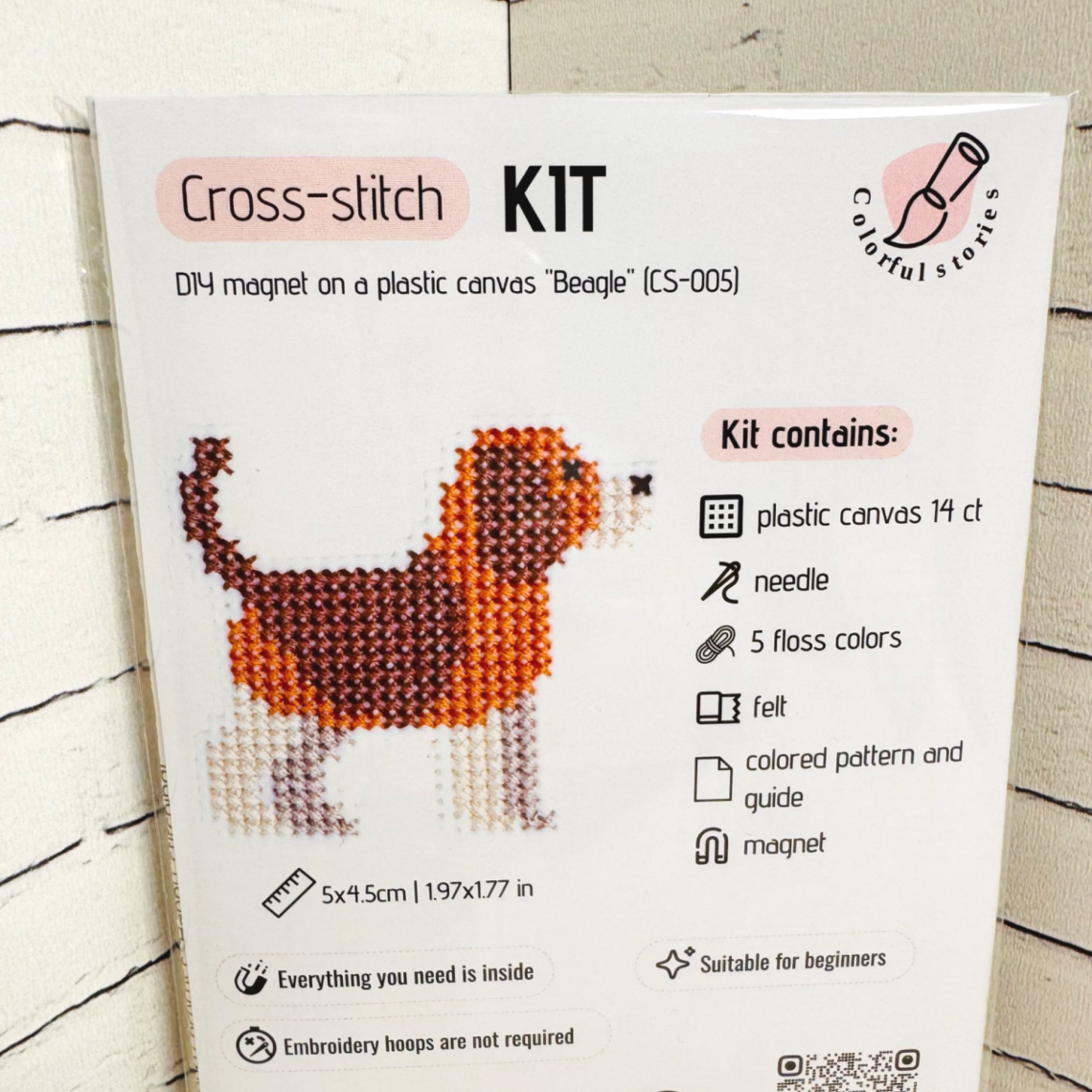
Welcome to the world of cross‑stitch embroidery! This step‑by‑step guide will walk you through the basics, from starting your first stitches to finishing a neat and beautiful piece.
Step 1. Getting Started: Choosing Your Materials
Before you begin, gather the following:
- Aida fabric (14‑count is ideal for beginners);
- Embroidery floss in the colors specified by your pattern;
- An embroidery hoop to keep the fabric taut;
- A tapestry needle with a blunt tip and a large eye;
- Scissors for trimming threads;
- Your cross‑stitch pattern (chart).
Step 2. Setting Up Your Hoop
- Cut a piece of Aida fabric, leaving a few inches of margin around the design.
- Place the fabric between the hoop’s rings and tighten the screw. Make sure the fabric is taut but not stretched.
- Find the center of your fabric and the center of the chart — start stitching from there to keep your design centered.
Step 3. Starting Your Thread
There are two common ways to start a new thread:
- The loop method. Fold the floss in half, leaving a loop at one end. Thread the needle through the loop and pull it almost all the way through, leaving a small loop on the wrong side. Take your first half‑cross stitch — the loop will hold the thread in place.
- Passing under existing threads. If you’re continuing in an area with stitches already made, pass the needle under 3–4 existing stitches on the back, then start stitching. This secures the thread without a knot.
Step 4. Stitching the First Rows: The Danish Cross Method
Many beginners find the Danish cross method the easiest:
- Stitch the first halves. Work across a row, making only the lower diagonal half‑stitches (⁄).
- Complete the crosses. When you reach the end of the row, turn and work back, adding the upper diagonal half‑stitches () in the opposite direction.
- Repeatain consistency. Make sure all top stitches lie in the same direction (usually from top left to bottom right) for a uniform look.
ℹ️ Tip: Complete one color at a time. After finishing the first color, move on to the second one according to the color key.
Step 5. Managing Thread Transitions
- Short gaps. If the distance between areas of the same color is small (less than 1–2 cm), you may carry the thread across the back without cutting or re‑threading.
- Distant areas. If you need to stitch the current color at a considerable distance from the needle’s current position, it’s best to secure and cut the thread, then re‑attach it at the new location.
⚠️ Warning: Avoid long running threads across open areas. Excessively long running threads on the reverse side can cause the canvas to become distorted, leading to uneven tension and ultimately ruining the appearance of the finished embroidery.
Step 6. Securing the Thread at the End
To finish a thread neatly:
- Pass the needle under several existing stitches on the wrong side (3–4 is ideal).
- Pull gently to hide the tail under the stitches.
- Trim the excess thread close to the fabric.
This method keeps the back of the embroidery tidy and avoids unsightly knots.
Step 7. Completing the Design
- Work color by color. Finish all symbols in one color before moving to the next.
- Check your progress. Periodically compare your work to the chart to make sure you haven’t missed any symbols.
- Stitch the final color. Proceed to embroider the final color section of the design, carefully matching each stitch to the corresponding symbol on the chart to complete the piece.
Step 8. Finishing Touches
- When the design is complete, carefully remove the fabric from the hoop.
- Gently hand‑wash the piece in lukewarm water with mild soap to remove any marks or fingerprints.
- Lay it flat to dry, then iron it on a low heat setting (with a pressing cloth) to smooth out any wrinkles.
- Frame your masterpiece or use it to decorate a pillow, bag, or other item!
Key Tips for Beginners
- Keep your stitches even and don’t pull too tightly — the fabric should lie flat.
- Always work with the correct number of floss strands (usually 2 for 14‑count Aida).
- Use a needle minder or small dish to keep track of your needle when not in use.
- Take breaks to avoid eye strain and hand fatigue.
- Practice on a small sampler before starting a large project.
Happy stitching! With patience and practice, you’ll soon create beautiful cross‑stitch pieces to treasure or gift.
👇 Watch also our video tutorial.